

Meet Us
Our lab is committed to building an open, friendly, safe, and inclusive research environment. We value teamwork, collaboration, reproducibility, equity, and open science.


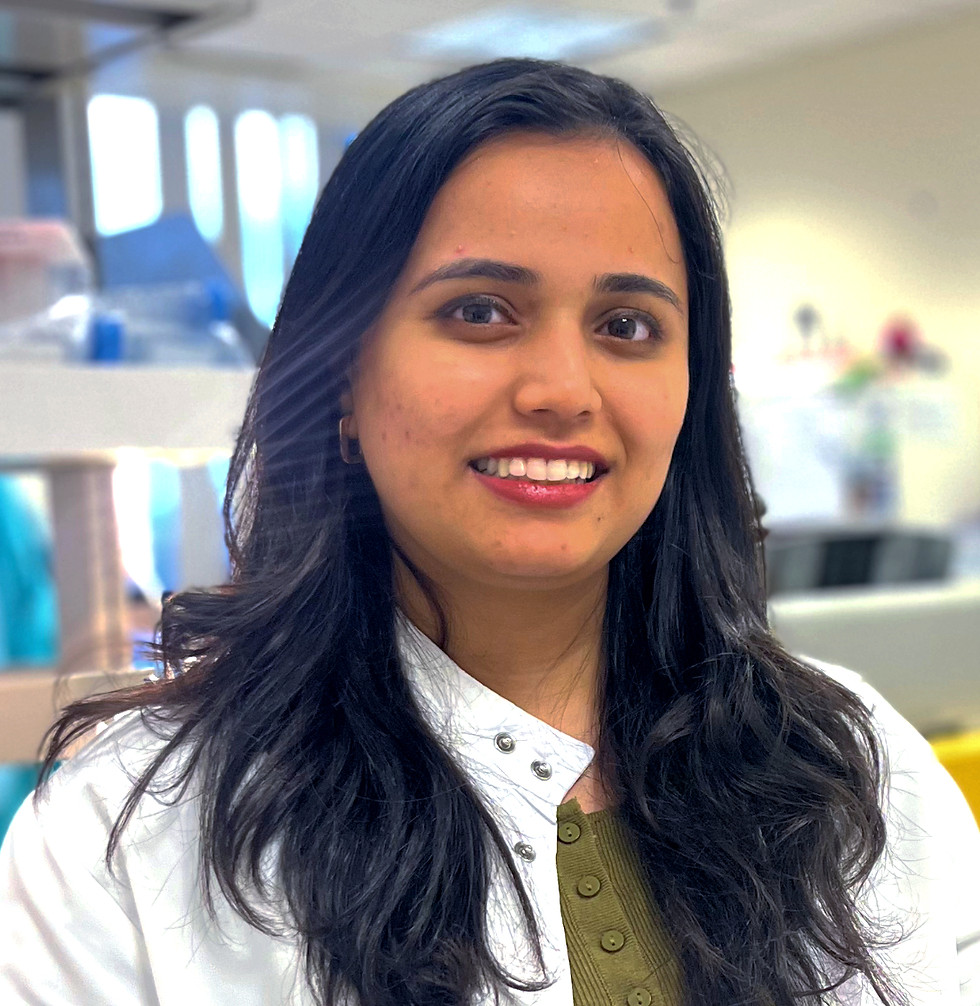


Elena Vasileva, PhD
Ph.D. in Molecular Biology - Institute of Cytology, Russian Academy of Sciences
Saint-Petersburg, Russia
I began my scientific training at Peter the Great St. Petersburg Polytechnic University, where I obtained both B.Sc. and M.Sc. degrees. During my undergraduate studies, I conducted research at Saint Petersburg State University, the Institute of Experimental Medicine (St. Petersburg, Russia), and Aberystwyth University (Aberystwyth, UK), gaining early experience in molecular and cellular biology research.
I later joined the laboratory of Gene Expression Regulation at the Institute of Cytology, Russian Academy of Sciences, (St. Petersburg, Russia) where I pursued my PhD in Molecular Biology under the mentorship of Dr. Nickolay Barlev, PhD. My doctoral work focused on RNA-binding proteins and post-translational regulation in colon cancer cells.
During my postdoctoral training under mentorship of Dr. James Amatruda, MD, PhD, at UT Southwestern Medical Center (Dallas, TX) and later at Children’s Hospital Los Angeles/USC (Los Angeles, CA), I developed several zebrafish genetic models to study Ewing sarcoma and explored the developmental origins of the disease. My research focused on understanding how oncogenic fusion proteins hijack developmental programs, rewire cell identity, and drive tumor initiation in vivo.
Outside of the lab, I love spending time with my family, listening to music, visiting museums and art spaces, and exploring both cities and nature. Saint Petersburg, my hometown, continues to be a source of inspiration for me because of its beauty, history, and culture. Recently, I have also developed a new hobby - exploring Washington, DC, and its unique neighborhoods, museums, and architecture.
Maria Jesus Herrero, PhD
Ph.D. in Physiology - University of Murcia
Murcia, Spain
"I am a lifelong learner who loves trying to better understand the world and nature."
During my research career, I have delved into genes and cells, hormone interactions, and the biological mechanisms in health and disease, with the aim of contributing to therapeutic advances and improving quality of life. My main areas of research include stress, biological rhythms, metabolism, obesity, neurodevelopment, autism and cancer.
I have had the privilege of conducting research in prominent laboratories around the world and living in a variety of countries, including Spain, United Kingdom, France, Norway, United States, Japan, Chile, and South Africa. These experiences have also allowed me to fulfill my permanent curiosity about different cultures and people.
Throughout my career, I combined scientific research with teaching activities as well as research management. Among others, I contributed to develop a list that narrowed down the number of genes possibly involved in the social pathophysiology of autistic disorders. From this list, we further investigated transcription factor FOXP2 and observed that when reduction of the specific FOXP2 transcription factor occurs in the amygdala during embryogenesis, it results in behavioral social deficits in adulthood. We also substantiated that the FOXP2 transcription factor surprisingly exercises a variable influence in cancer progression and identified that up- or down-regulated FOXP2 levels occurred depending on the type of cancer. More recently, I contributed to characterize the function of GPCR variants found in autistic patients in vitro, and the potential of several non-peptide ligands to restore signaling. We also launched a research program to improve sleep and well-being in autistic children in South Africa. I am always motivated to pursue exciting new discoveries in biomedical research!
Outside of the lab, I love cooking for my family and friends, and I enjoy everything from Spanish empanada, gazpacho and paella, to Latin American and Japanese cuisine. I am a sports-oriented person who is always either walking, hiking, cycling, swimming, diving, playing tennis, or enjoying outdoor activities. I also love reading, playing and listening to music!


Ishita Chopra, MSc
MSc in Bioinformatics & Molecular Biochemistry – George Washington University, USA
BSc in Biotechnology and Life Sciences and Chemistry – SVVV University, Indore, India
I'm from India, where I did my undergraduate studies in Biotechnology, Life Sciences, and Chemistry, though I also spent part of my early childhood in Sri Lanka. Working in the lab early on made me want to understand not just what cells do, but how the same DNA can build so many different kinds of cells, and what tips a healthy one toward disease. That question pushed me toward computational biology. I spent a few years as a Bioinformatics Analyst at Eminent Biosciences in India, building pipelines to study cancer genomes and helping search for new drug candidates.
I then came to Washington, DC for my master's at George Washington University and joined the Rahnavard Lab, where I worked with single-cell data. A big focus of mine was studying skin across different ancestries, comparing healthy tissue to understand how molecular and gene regulatory pathways differ from one population to another. I also led a single-cell multiome project, combining gene expression and chromatin accessibility data to study how gene regulation drives inflammation. Together, this work deepened my interest in how the same biology can play out differently across people, and how those differences shape health and disease.
I really enjoy the computational side, exploring data, building pipelines and packages, and creating clear visualizations that make biology easier to understand. I'm especially interested in how cells lose their normal identity in cancer, and I'm excited to dig into the early, developmental roots of pediatric cancers.
Outside of the lab, I love hiking, swimming, and basketball; exploring Washington, DC's museums and food scene; and reading manga or books about marine life. An animal lover. A devoted foodie, I love Indian (the spicier the better), Italian, and ramen. I'm a chai lover at heart, and bubble tea is my absolute favorite.